Services
Five S Concept & implementation
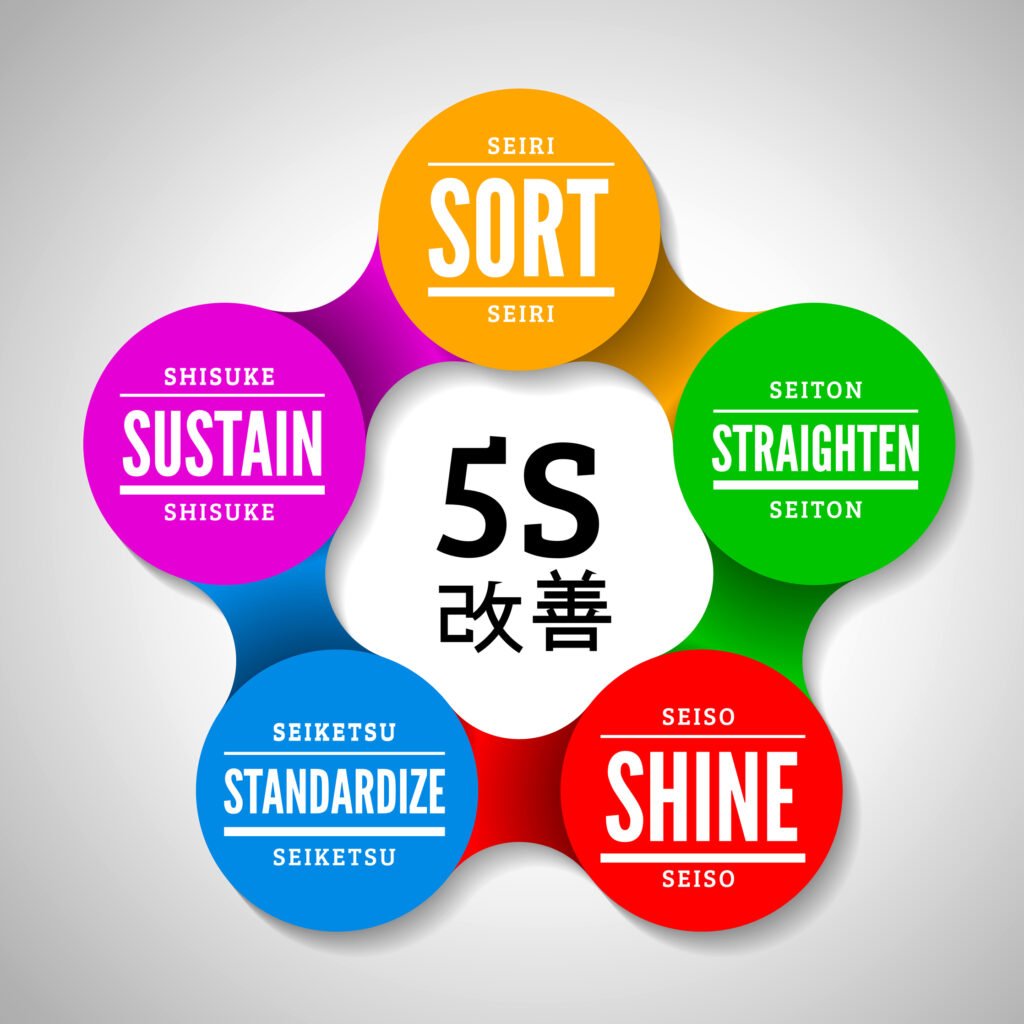
The 5-S system is a workplace management methodology based on five Japanese principles: Seiri, Seiton, Seiso, Seiketsu, and Shitsuke. In English, these translate to Sort, Set in Order, Shine, Standardize, and Sustain. The name “5-S” is derived from the fact that each principle begins with the letter “S.”
This system is designed to enhance workplace efficiency and effectiveness by:
- Sorting: Separating essential items from non-essential ones.
- Setting in Order: Arranging items in an organized manner for easy access.
- Shining: Keeping the workspace and equipment clean and orderly.
- Standardizing: Establishing consistent practices to maintain organization.
- Sustaining: Continuously practicing and improving these steps.
By adopting the 5-S methodology, organizations can improve efficiency, lower costs, enhance quality, and boost productivity. This approach is one of the foundational principles of lean manufacturing. Although straightforward and rooted in common sense, its impact on workplace organization and performance is profound. In today’s global economy and highly competitive markets, applying such systems is essential for staying ahead.
Total Productive Maintenance (TPM)
Building a Culture of Efficiency and Excellence
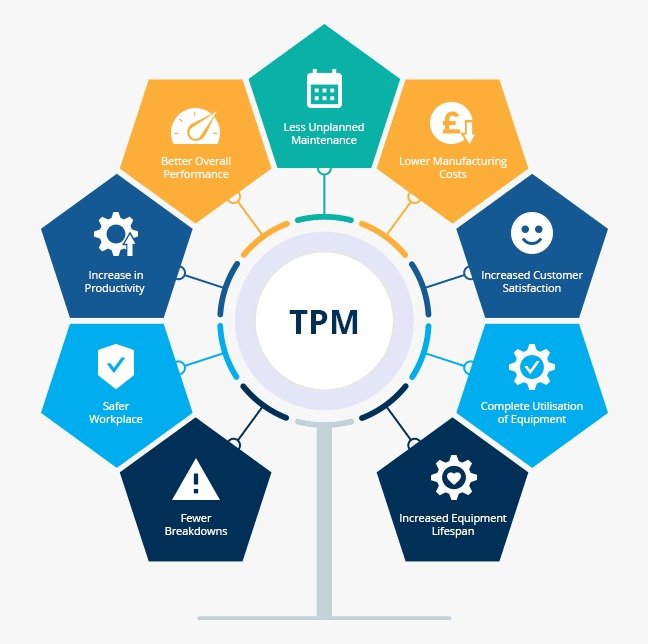
TPM is a proven approach designed to improve the efficiency of plants, equipment, and processes while creating a safer and more productive work environment. Developed by the Japan Institute of Planned Maintenance (JIPM), it focuses on achieving Zero BAD—no Breakdowns, Accidents, or Defects.
How We Implement TPM
We follow JIPM’s guidelines to bring TPM practices to life at your facility. Here’s how we do it:
- Choose Focus Areas: Identify key machines or areas to act as models for implementation.
- Build a Roadmap: Develop a step-by-step plan tailored to your business.
- Form Teams: Organize teams to lead and implement TPM efforts.
- Train Your Team: Provide hands-on training to ensure everyone understands the process.
- Implement the 8 TPM Pillars: Roll out the core principles to boost efficiency and reduce losses.
- Achieve Excellence: Guide you toward awards like the TPM Excellence Award and beyond.
The Benefits of TPM
Implementing TPM delivers measurable results:
- Boost Overall Equipment Effectiveness (OEE).
- Reduce risks with Zero Breakdowns, Accidents, and Defects.
- Improve productivity and minimize downtime.
- Promote safety and environmental sustainability.
- Enhance delivery performance and customer satisfaction.
- Maximize ROI by reducing unnecessary investments and losses.

Lean & Six Sigma
Streamline Processes, Deliver Quality
Lean and Six Sigma work together to improve efficiency and quality across all areas of your business.
- Lean eliminates waste and ensures workflows are smooth and efficient.
- Six Sigma focuses on identifying and fixing defects to deliver consistent and reliable results.
By combining these two approaches, organizations can save time, cut costs, and improve customer satisfaction.
Our Approach to Lean and Six Sigma
We make Lean and Six Sigma practical and easy to adopt with these steps:
- Understand Processes: Map out workflows to find inefficiencies and defects.
- Streamline and Improve: Use Lean tools like 5S, Kanban, and Gemba Walks to eliminate waste, and apply Six Sigma’s DMAIC (Define, Measure, Analyze, Improve, Control) method to solve problems.
- Train Teams: Provide hands-on workshops and training to ensure everyone contributes.
- Monitor and Sustain: Track results, celebrate wins, and maintain improvements over time.
Benefits of Lean and Six Sigma
By combining Lean and Six Sigma, businesses can:
- Save Time and Resources: Cut waste and improve efficiency.
- Deliver High Quality: Eliminate defects and ensure reliability.
- Boost Team Productivity: Engage employees in meaningful improvements.
- Increase Customer Satisfaction: Provide faster, better, and more consistent results.
- Lower Costs: Reduce unnecessary spending through smarter processes.
KAIZEN Concept & Implementation
Small Changes, Big Impact
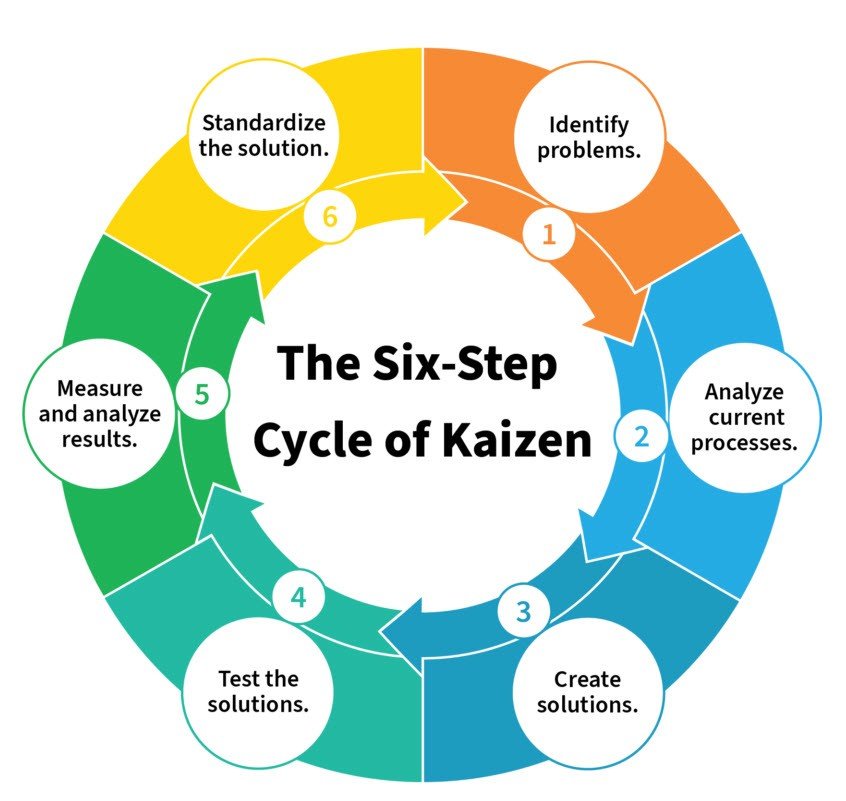
Kaizen, meaning “change for the better,” is a simple yet powerful philosophy focused on continuous improvement. It involves everyone in the organization—working together to improve processes, reduce waste, and deliver better results for customers.
Kaizen is about making small, consistent changes that add up to significant improvements over time, fostering teamwork, accountability, and long-term success.
How We Implement Kaizen
We guide organizations in adopting the Kaizen approach by focusing on practical steps to build a culture of improvement:
- Build Awareness: Train employees to understand Kaizen principles and how to apply them.
- Analyze Processes: Identify inefficiencies and areas where improvement is needed.
- Generate Ideas: Encourage team members to share ideas for improvement.
- Form Kaizen Teams: Create groups to lead improvement efforts across departments.
- Take Action: Implement small changes using tools like 5S, Gemba Walks, and the PDCA Cycle.
- Review and Improve: Measure results, refine processes, and continuously adapt.
- Celebrate Success: Recognize achievements and ensure changes are sustained over time.
Benefits of Kaizen
Kaizen creates a positive ripple effect throughout the organization:
- Streamlined Processes: Reduce waste and inefficiencies.
- Stronger Teamwork: Foster collaboration and shared responsibility.
- Higher Quality: Deliver better products and services.
- Happier Teams: Empower and engage employees at all levels.
- Cost Savings: Use resources more efficiently.
- Sustainable Growth: Build a culture of ongoing improvement.
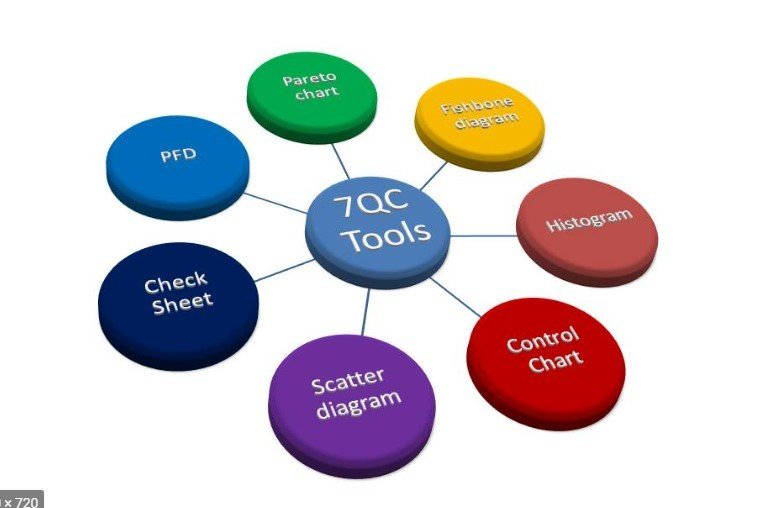
7QC Tools
Powerful Tools for Quality Improvement
The 7 QC Tools are essential for solving problems, improving quality, and making data-driven decisions. They help organizations identify issues and improve processes efficiently.
The 7 QC Tools
Fishbone Diagram (Cause-and-Effect)
- A visual tool to identify the root causes of problems. It organizes potential causes into categories like methods, materials, people, and machines.
Check Sheet
- A simple way to collect data and track defects or problems. It helps recognize patterns or trends in the data.
Control Chart
- A graph to monitor process behavior over time, helping track stability and catch variations early.
Histogram
- A bar graph that shows how data is distributed, helping visualize variation and detect trends.
Pareto Chart
- A bar chart that highlights the most important issues using the 80/20 rule to focus on problems that have the greatest impact.
Scatter Diagram
- A graph to show the relationship between two variables, helping identify cause-and-effect links.
Flowchart
- A diagram that maps out the steps of a process, showing how work flows and identifying potential inefficiencies.
How We Use the 7 QC Tools
We use these tools to:
- Identify Issues: With Check Sheets and Pareto Charts, we track and pinpoint problems.
- Analyze Data: Histograms and Scatter Diagrams help us visualize and understand data patterns.
- Solve Problems: Fishbone Diagrams and Flowcharts guide us to root causes and process improvements.
- Monitor Progress: Control Charts ensure improvements are sustained by tracking performance over time.
Benefits of the 7 QC Tools
Using these tools helps you:
- Identify Problems Quickly: Detect issues early to prevent bigger problems.
- Make Better Decisions: Use accurate data to drive improvements.
- Improve Quality: Consistently meet quality standards and customer expectations.
- Streamline Processes: Remove inefficiencies and optimize workflows.